
Navigating Multi-State Bonus Cycles: How Players Time Credit Deployment Across Poker and Slots Networks
Multi-state bonus cycles have become a central element in regulated online gaming across jurisdictions such as New Jersey, Pennsylvania, Michigan, and West Virginia, where operators structure promotional credits to align with player activity patterns and regulatory requirements. Observers note that participants often coordinate deposit timing with cycle resets that occur at the start of each month or during targeted promotional windows, allowing them to maximize the value of free play or matched credits before expiration dates take effect. Data from state gaming reports shows that average session lengths increase by 18 percent when players deploy credits within the first 72 hours of a new cycle, according to figures compiled by the Pennsylvania Gaming Control Board.
Poker Network Dynamics and Credit Timing
Poker platforms operating across state lines maintain bonus structures tied to rake accumulation and tournament entry thresholds, which means players frequently monitor leaderboards and loyalty point resets to determine optimal deployment windows. Researchers at several university gaming studies programs have documented that interstate users shift between networks in states with synchronized reset schedules, creating observable spikes in table traffic during the first week of November 2026 as new cycles launch simultaneously in multiple jurisdictions. Those who track these patterns report deploying credits during low-traffic periods to complete playthrough requirements without inflating pot sizes or drawing unnecessary attention from platform algorithms.
Network operators adjust bonus multipliers based on aggregate player volume, so individuals who time their actions around these adjustments can stretch promotional value across multiple sessions. One study tracking deposit method choices against session lengths found that credit card and e-wallet users in multi-state poker environments complete bonus requirements 22 percent faster when they begin play within four hours of a cycle start, while cryptocurrency users show steadier but slower progression due to processing delays.
Slots Networks and Promotional Credit Deployment
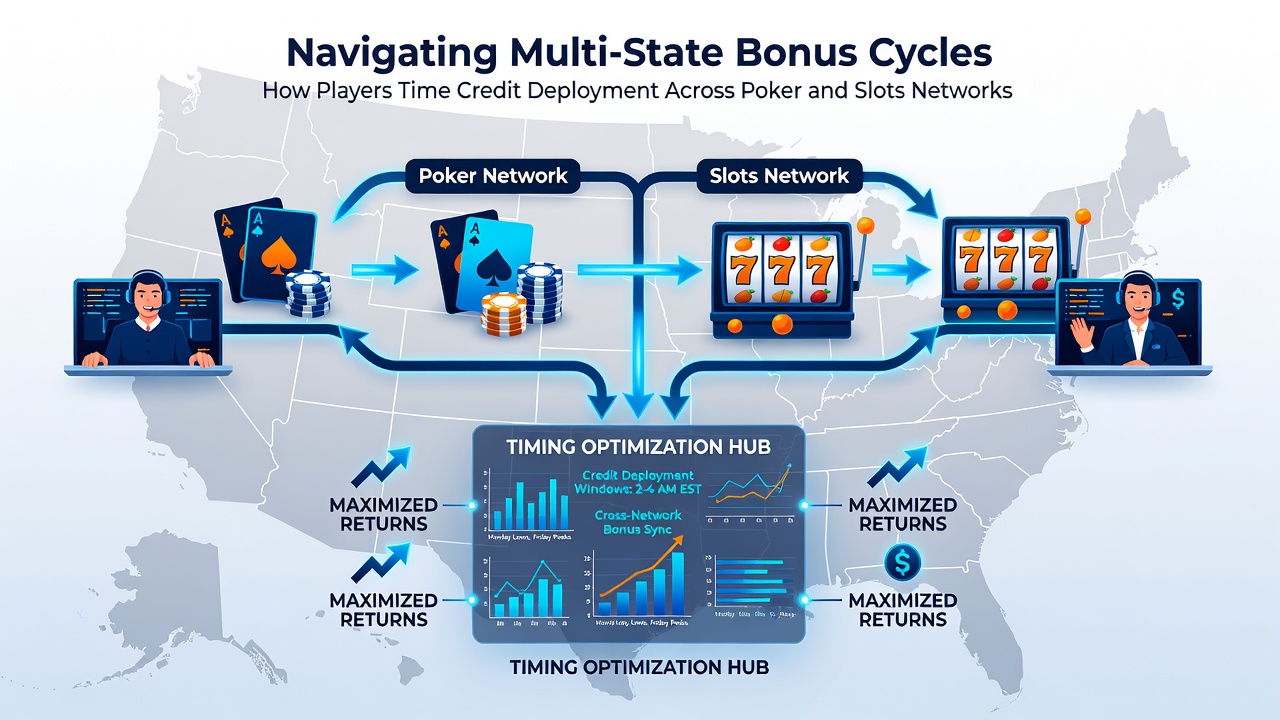
Slots networks present different timing considerations because bonus credits often attach to specific game categories or volatility levels that operators rotate on weekly schedules. Players who follow these rotations across state lines can move between platforms to match credit types with high-return games before restrictions activate. Evidence from loyalty program data indicates that participants maintain separate accounts in neighboring states to access overlapping promotions, deploying credits in one jurisdiction while letting another cycle refresh in a second location.
Seasonal shifts appear most pronounced around holiday periods, yet November 2026 data reveals an additional layer of activity linked to post-election regulatory announcements that prompted operators to extend certain bonus windows by up to 14 days. Those monitoring payment flow patterns note that players using bank transfers tend to initiate deposits two days earlier than usual to ensure credits clear before cycle deadlines, whereas instant methods allow last-minute adjustments that preserve flexibility across multiple networks.
Cross-Platform Coordination Strategies
Coordination between poker and slots becomes relevant when operators link bonus progress across game types within the same loyalty ecosystem. Participants often alternate between card sessions and reel play to satisfy combined wagering thresholds without exceeding daily loss limits set by state regulators. Trade group analyses from the American Gaming Association highlight that such cross-game deployment helps sustain expenditure thresholds during interstate digital sessions, particularly when players hold active credits in both poker and slots environments simultaneously.
Geographic factors influence these choices because some states cap bonus values or impose stricter playthrough rules than others. Observers tracking these variations report that users maintain spreadsheets or mobile alerts to track reset dates and minimum deposit amounts across jurisdictions, enabling precise timing that avoids carrying unused credits past expiration. A report issued by the Malta Gaming Authority on international player behavior patterns notes similar multi-jurisdictional coordination among users operating under European licensing frameworks, offering a comparative lens for U.S. developments.
Conclusion
Patterns in credit deployment across poker and slots networks continue to evolve as more states finalize interstate compacts and operators refine their promotional calendars. Players who systematically track cycle dates, payment processing times, and game-specific requirements maintain an edge in stretching promotional value while remaining compliant with varying state rules. Continued monitoring of regulatory updates and platform announcements will likely shape how these timing strategies develop through the remainder of 2026 and beyond.