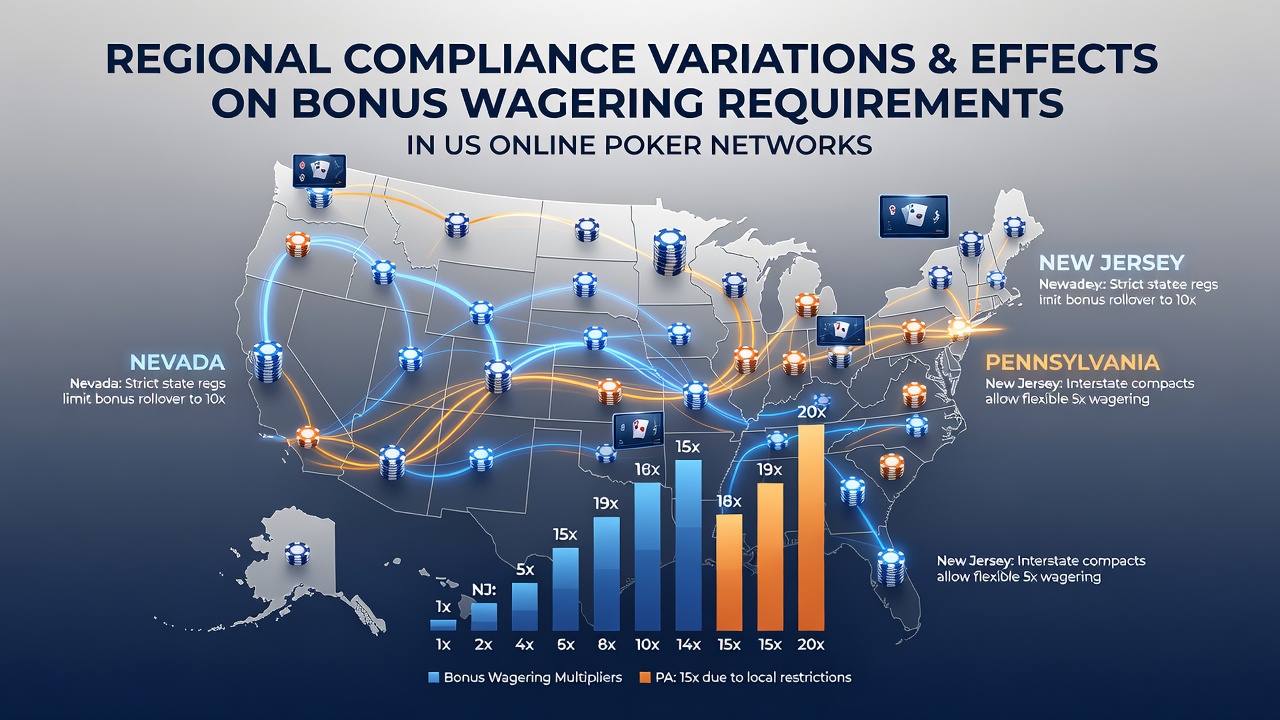
State Regulatory Differences Impacting Wagering Conditions for Promotional Offers Across Interstate Online Poker Systems
Operators in American digital poker networks encounter distinct compliance frameworks that shape bonus structures and associated playthrough obligations, with each participating state imposing its own set of conditions on promotional credits. These differences stem from legislation enacted at the state level since the expansion of legalized online gaming began, creating a landscape where a single network must adjust offerings based on player location and applicable rules.
Core Elements of State-Level Oversight
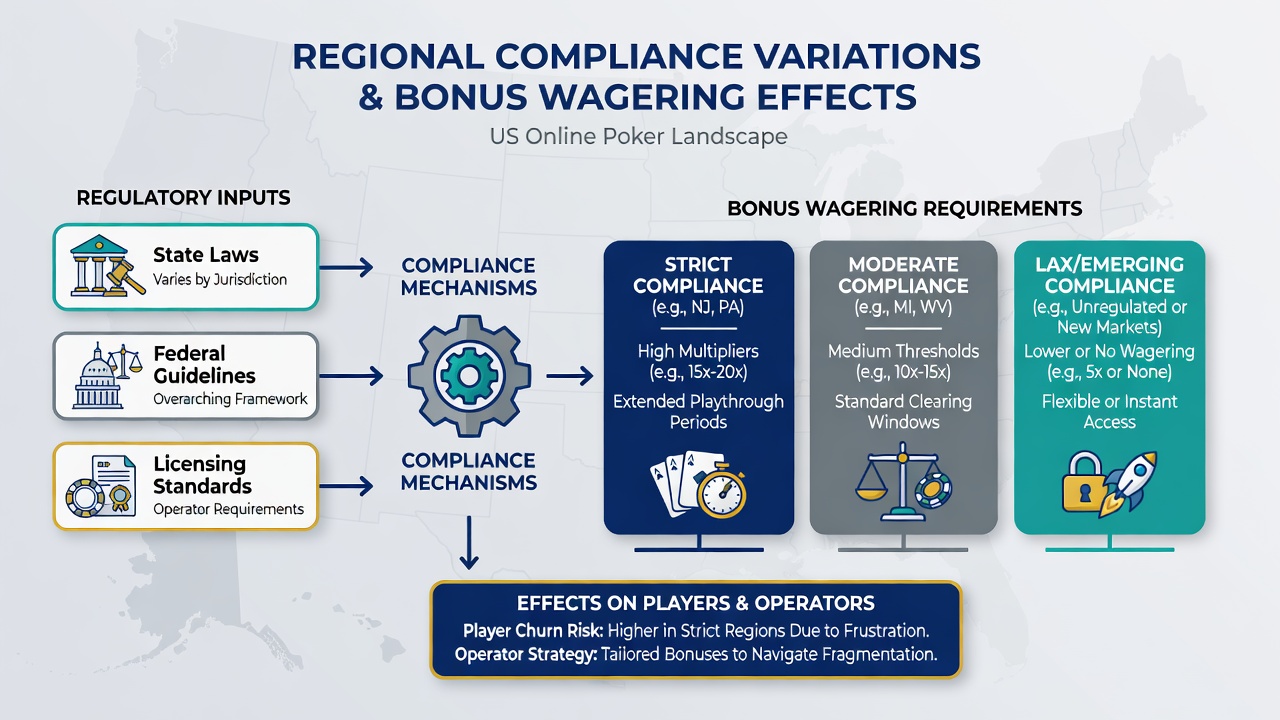
Regulatory bodies in states like New Jersey, Pennsylvania, and Michigan establish specific guidelines for how bonuses convert into playable funds and what minimum wagering multiples must be met before withdrawal eligibility activates. Data from regulatory filings indicate that playthrough requirements range from 10x to 30x the bonus amount depending on the jurisdiction, with some states mandating separate tracking for poker rake contributions versus other game types. Observers note that these thresholds directly affect how networks allocate promotional budgets across multi-state user bases.
Variations in Playthrough Multiples and Tracking Methods
Compliance requirements differ markedly when networks operate under interstate agreements, because each state's licensing authority reviews bonus terms independently before approval. In one jurisdiction, for example, only 50 percent of rake generated at cash tables counts toward wagering targets, whereas another state permits full credit for all poker activity; this discrepancy forces operators to maintain separate player ledgers and adjust bonus terms dynamically based on detected location. Figures released by the Michigan Gaming Control Board show that average bonus redemption rates shifted by 12 percent after updated tracking rules took effect in early 2026, illustrating how small policy adjustments alter player behavior patterns.
Networks must also contend with restrictions on bonus stacking and expiration timelines that vary by state, with some regulators requiring a minimum active period of 30 days while others cap eligibility at 14 days. These constraints influence how promotional campaigns roll out during peak periods, particularly around major poker series that draw participants from multiple regulated markets simultaneously.
Effects on Network Operations and Player Engagement
Interstate poker networks respond to these regional differences by implementing geo-fenced bonus systems that automatically apply the strictest applicable rules when a player crosses state lines or participates in shared tournaments. Research from academic analyses of digital gaming platforms indicates that such segmentation reduces bonus abuse across borders but also increases administrative overhead for operators who must reconcile conflicting state reporting standards on a monthly basis. As of October 2026, several networks reported deploying enhanced compliance software to handle real-time adjustments without disrupting live sessions.
Player retention metrics compiled across participating states reveal that wagering requirement variations correlate with session length patterns, because users in jurisdictions with higher multiples tend to extend play to meet thresholds while those facing lower hurdles often cash out sooner. Industry reports highlight that these behavioral shifts require networks to recalibrate loyalty incentives to maintain consistent engagement levels despite the regulatory patchwork.
Interstate Agreements and Emerging Standards
Compacts between states have begun to address some inconsistencies, yet significant differences persist in how bonus funds interact with poker-specific activities such as tournament buy-ins or sit-and-go entries. Data compiled through multi-state oversight groups show that standardized reporting formats adopted in late 2025 helped reduce discrepancies in how playthrough progress is calculated, although full harmonization remains incomplete. External analyses from organizations like the American Gaming Association underscore that continued expansion into additional states will likely introduce further layers of compliance complexity for existing networks.
One documented case involved a major operator adjusting its welcome bonus across three states to satisfy simultaneous reviews, resulting in a unified 20x playthrough structure that satisfied all involved regulators while preserving promotional appeal. Such adaptations demonstrate how networks balance legal obligations against competitive positioning in an environment where player expectations evolve alongside regulatory updates.
Conclusion
Regional compliance variations continue to define how bonus wagering requirements operate within US online poker networks, with state-specific rules on multiples, tracking percentages, and eligibility windows shaping both operator strategies and user experiences. Ongoing developments in interstate cooperation and software solutions suggest that these frameworks will keep evolving through 2026 and beyond, requiring sustained attention from networks and regulators alike to maintain consistent standards across jurisdictions.